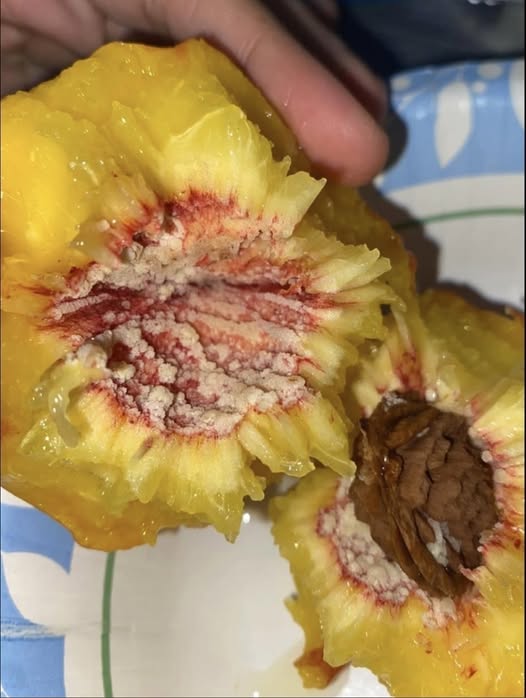
Fruit Condition: The surrounding peach flesh is still firm, juicy, and shows no signs of spoilage.
If the white substance is only on the pit and the fruit looks and smells fine, the peach was safe to eat.
When Should You Be Concerned? (Red Flags)
While cottony leak is harmless, you should discard the peach if you see any of these warning signs, which indicate true spoilage or mold:
Fuzz on the Flesh: White or grey fuzzy growth on the soft fruit
How to Prevent It
You can’t always prevent it, but you can reduce the chances by managing moisture and humidity.
Eat Quickly: Consume peaches soon after they ripen.
Store Properly: Keep them in a cool, dry place. Only refrigerate fully ripe peaches and avoid sealing them in plastic bags, which traps moisture.
Inspect and Wash: Check peaches for bruises before storing and give them a quick rinse before eating.
Final Takeaway
Nature is full of harmless microbes, and the yeast on a peach pit is a perfect example. Instead of fearing every fuzzy substance, trust your senses. If the fruit looks, feels, and smells good, that white stuff on the pit is just a quirk of nature—not a reason to panic.
itself.
Mushy or Discolored Fruit: The flesh is soft, brown, slimy, or leaking dark juice.
Offensive Odor: The peach smells sour, alcoholic, or outright rotten.
Pit Damage: The pit is cracked and leaking dark fluid, which can signal internal rot.
✅ The Bottom Line: If the problem is confined to the pit, you’re fine. If the edible flesh is affected, throw it out.
continued on next page