Father Married Off His Daughter But What Happened Next Changed Everything
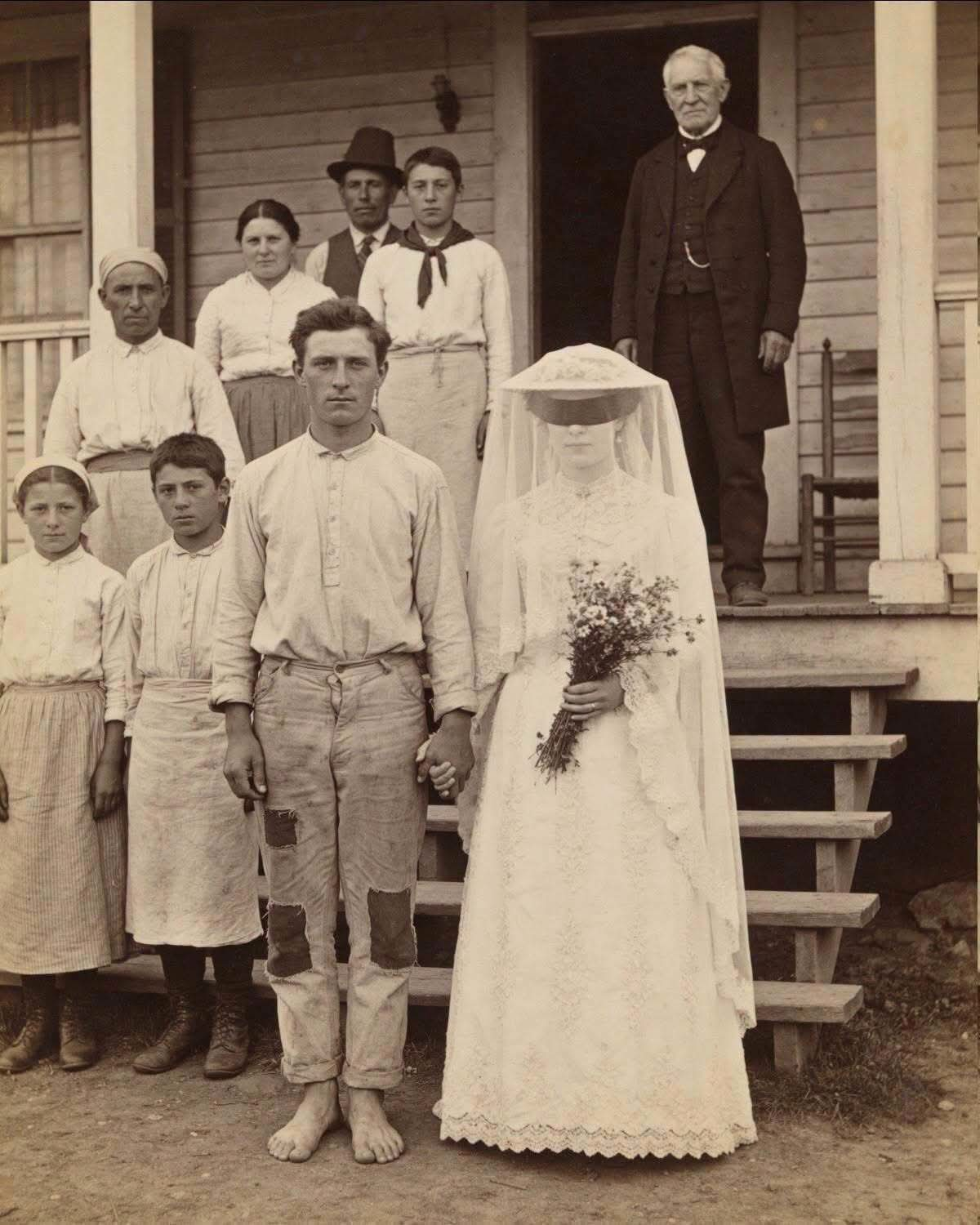
“The father married off his daughter, who was blind from birth, to a beggar — and what happened afterward surprised many people.”
Zainab had never seen the world, but she could feel its cruelty with every breath she took. She was born blind into a family that valued beauty above all else. Her two sisters were admired for their striking eyes and graceful figures, while Zainab was treated as a burden — a shameful secret hidden behind closed doors.
Her mother died when she was only five years old, and from that moment on, her father changed. He became bitter, resentful, and cruel — especially toward her. He never called her by her name. He called her “that thing.” He didn’t want her at the table during family meals, nor outside when guests came over. He believed she was cursed, and when she turned twenty-one, he made a decision that would shatter what little remained of her already broken heart.
One morning, he entered her small room where she sat quietly, running her fingers over the worn pages of a Braille book, and dropped a folded piece of fabric onto her lap.
“You’re getting married tomorrow,” he said flatly.
She froze. The words made no sense. Married? To whom?
“He’s a beggar from the mosque,” her father continued. “You’re blind. He’s poor. A perfect match.”
She felt the blood drain from her face. She wanted to scream, but no sound came out. She had no choice. Her father never gave her choices.
The next day, she was married in a rushed, modest ceremony. She never saw his face, of course — and no one described it to her. Her father pushed her toward the man and told her to take his arm. She obeyed like a ghost in her own body. People laughed behind their hands.
“The blind girl and the beggar.”
After the ceremony, her father handed her a small bag with a few clothes and shoved her toward the man once again.
“She’s your problem now,” he said, walking away without looking back.
The beggar, whose name was Yusha, led her silently down the road. He didn’t speak for a long time. They arrived at a broken little hut on the edge of the village. It smelled of damp earth and smoke.
“It’s not much,” Yusha said gently. “But you’ll be safe here.”
She sat on the old mat inside, holding back tears. This was her life now — a blind girl married to a beggar, living in a hut made of mud and fragile hope.
But something strange happened that very first night.
Yusha made her tea with careful, gentle hands. He gave her his own blanket and slept by the door, like a guard dog protecting his queen. He spoke to her as if she mattered — asking what stories she liked, what dreams she had, what foods made her smile. No one had ever asked her those questions before.
Days turned into weeks. Every morning, Yusha walked her to the river, describing the sun, the birds, the trees with such poetry that she began to feel as though she could see them through his words. He sang to her while washing clothes and told her stories about stars and distant lands at night. She laughed for the first time in years. Her heart slowly began to open.
And in that strange little hut, something unexpected happened — Zainab fell in love.
One afternoon, as she reached for his hand, she asked softly:
“Were you always a beggar?”
He hesitated. Then said quietly,
“Not always.”
But he said nothing more. And she didn’t press him.
Until one day.
She went to the market alone to buy vegetables. Yusha had given her careful instructions, and she memorized every step. But halfway there, someone grabbed her arm violently.
“Blind rat!” a voice spat.
It was her sister. Aminah.
“You’re still alive? Still playing wife to a beggar?”
Zainab felt tears rise, but she stood tall.
“I’m happy,” she said.
Aminah laughed cruelly.
“You don’t even know what he is. He’s worthless. Just like you.”
Then she whispered something that shattered her.
“He’s not a beggar, Zainab. You were lied to.”
Zainab stumbled back home, confused and shaken. She waited until nightfall, and when Yusha returned, she asked again — this time firmly.
“Tell me the truth. Who are you really?”
That was when he knelt in front of her, took her hands, and said:
“You were never supposed to know yet. But I can’t lie to you anymore.”
Her heart pounded.

Zainab has spent her life under the strict control of her father, Malik, in a remote valley where tradition and family reputation matter more than personal choice. To Malik, his daughter is not someone with dreams and desires, but someone whose future must serve the family’s interests.
When Malik announces that Zainab will marry Yusha, a quiet widower she barely knows, she realizes that her opinion means nothing to him. There is no discussion and no opportunity to refuse. On her wedding day, she feels less like a bride and more like a sacrifice being handed over to a stranger.
Yet Yusha is very different from the man she expected him to be. Instead of demanding obedience, he speaks gently and respects her fear. He does not force her to accept the marriage emotionally or physically, giving her the time and space she needs to feel safe in her new surroundings.As the days pass, Zainab begins noticing Yusha’s quiet acts of kindness. He listens when she speaks, helps around the home, and never ridicules her opinions or fears. These simple gestures are unfamiliar to her because she has spent years believing that authority always comes with anger and control.
Slowly, Zainab begins lowering the walls she built around herself. Her painful memories of Malik do not disappear, but Yusha’s patience gives her a chance to heal. For the first time, she understands that strength does not always have to be loud or forceful.
What began as a marriage forced upon her gradually becomes an unexpected partnership. Zainab discovers that she can still hope for happiness, while Yusha learns that trust cannot be demanded—it must be earned through patience, honesty, and respect.
Together, they begin creating a home based on understanding rather than fear. Their relationship gives Zainab something she had never truly experienced before: the freedom to express herself and the confidence to believe that her feelings matter.
Ultimately, Zainab’s story is about more than an arranged marriage. It is a story of dignity, resilience, healing, and discovering one’s worth. It reminds us that even when people cannot choose their circumstances, kindness and respect can help them find the courage to build a better life.


